

Blog
Five Gardening Mistakes to Avoid Before the Ground Freezes
Nov
November is here, and Connecticut’s gardens are getting ready for their winter rest. The leaves are falling, temperatures are dropping, and it’s tempting to put away the gardening tools until spring.
But before you call it a season, there are a few things worth checking off your gardening to-do list!
A little attention now can make a big difference in how your landscape looks and grows next spring. From pruning at the wrong time to forgetting about outdoor hoses, these five common fall gardening mistakes can lead to unnecessary winter damage.
Let’s make sure your garden is ready for whatever Mother Nature has in store!
1. Pruning Trees and Shrubs at the Wrong Time
It may seem like a good idea to give everything one final trim before winter, but not all plants appreciate late-season pruning.
Pruning at the wrong time can remove next spring’s flower buds or leave plants more vulnerable to cold damage.
Spring-flowering shrubs such as lilacs, azaleas, and rhododendrons typically form their flower buds during the previous growing season. Pruning them in fall can mean fewer flowers next spring.
Heavy pruning can also expose tender tissue to harsh winter conditions.
What to do instead: Remove dead, damaged, or diseased branches as needed, but save major pruning for the appropriate season for each plant. When in doubt, ask before you snip!
2. Forgetting to Water Before Winter
Cooler temperatures don’t automatically mean your plants have enough moisture!
Trees, shrubs, and evergreens can experience dry soil conditions even during chilly November weather.
Newly planted trees and shrubs are especially vulnerable because their root systems are still developing.
Evergreens also need particular attention. Unlike deciduous trees, they retain their foliage throughout winter and continue losing moisture through their needles or leaves.
If the soil freezes while plants are already stressed from drought, they may experience winter drying or browning.
What to do instead: Check the soil several inches below the surface and water deeply when needed, as long as the ground remains unfrozen. Avoid watering when the soil is already soggy.
3. Leaving Garden Hoses Connected
This is one of those simple tasks that’s easy to forget until the first hard freeze arrives!
Water trapped inside hoses, spray nozzles, and outdoor faucets can freeze and expand, potentially causing damage to your equipment or plumbing.
And nobody wants to discover a broken outdoor faucet when spring rolls around!
What to do instead: Disconnect garden hoses, drain them completely, and store them in a protected location. Prepare outdoor faucets and irrigation systems for freezing temperatures according to their design.
A few minutes of preparation now could save you an expensive headache later.
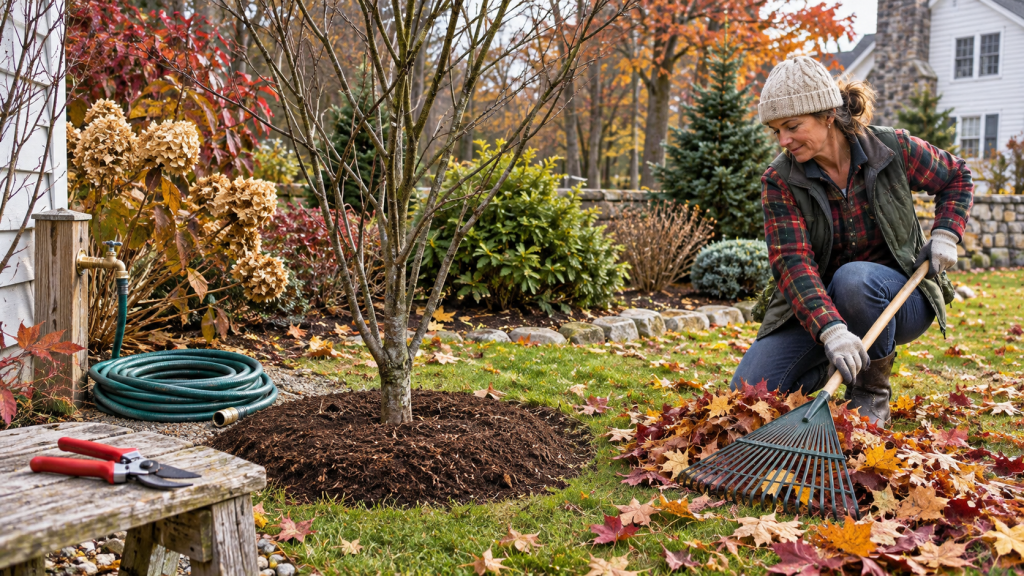
4. Piling Mulch Against Tree Trunks
Mulch is one of the best ways to help protect plant roots during winter, but too much of a good thing can cause problems!
Piling mulch high against the base of trees creates what’s often called a “mulch volcano.”
This can trap moisture against the bark, encourage decay, and create favorable conditions for pests.
What to do instead: Apply approximately 2 to 3 inches of organic mulch around the root zone, keeping it several inches away from trunks and stems.
For new winter protection, wait until the soil has cooled or frozen before applying insulating mulch where recommended.
Think of mulch as a cozy blanket for your plants, not a scarf wrapped tightly around their necks!
5. Cleaning Up Too Much or Too Little
Fall cleanup is important, but your garden doesn’t have to be spotless!
Leaving thick layers of wet leaves on the lawn can smother grass, while diseased plant debris may harbor problems that return next season.
On the other hand, removing every leaf and cutting down every perennial can eliminate valuable shelter for beneficial insects and wildlife.
What to do instead: Find a healthy balance!
- Remove diseased plant material and heavily matted leaves from lawns.
- Shred healthy fallen leaves to use as mulch in garden beds.
- Leave sturdy perennial seed heads for winter interest and bird food.
- Allow some healthy plant stems and leaf litter to remain as wildlife habitat.
- Clean and store garden tools before winter.
A slightly less-than-perfect garden can actually be a healthier garden!
A Little Fall Care Goes a Long Way!
Winter preparation doesn’t have to be complicated. By avoiding these common mistakes, you can help protect your landscape from unnecessary stress and give your plants a healthier start next spring.
Whether you’re protecting evergreens, cleaning up garden beds, or checking off those final outdoor chores, November is a great time to show your garden a little extra care.
Need help getting your garden winter-ready?
Stop by Cropley’s Garden Center in Bolton, CT! Our friendly team is happy to help you find seasonal gardening supplies, answer your plant care questions, and offer advice for protecting your Connecticut landscape through the colder months.
Take care of your garden today, and let it reward you with beautiful growth next spring!