

Blog
Is It Too Late to Plant? What Gardeners Should Know
Nov
November has arrived, the leaves are falling, and the temperatures are dropping. If you’ve been putting off a few gardening projects, you might be wondering, “Is it too late to plant?”
Well, don’t put those gardening gloves away just yet!
Here in Connecticut, November doesn’t always mean the end of planting season. While the ideal planting window has passed for many plants, there may still be a few opportunities to get something growing before winter settles in!
The secret is knowing what to plant, checking your soil conditions, and paying attention to the weather.
The Ground Matters More Than the Calendar
Just because we’ve had a few frosty mornings doesn’t necessarily mean the ground is frozen!
Soil temperatures often remain warmer than the air, allowing some root activity to continue even after plants have gone dormant above ground.
As long as the soil is workable, well-drained, and not frozen, certain planting projects may still be possible.
However, there’s an important catch.
The later you plant, the less time your plants have to establish roots before winter. That’s why choosing cold-hardy varieties and knowing when to wait can make all the difference.
What Can You Still Plant in November?
Depending on soil conditions and the weather forecast, a few planting opportunities may remain.
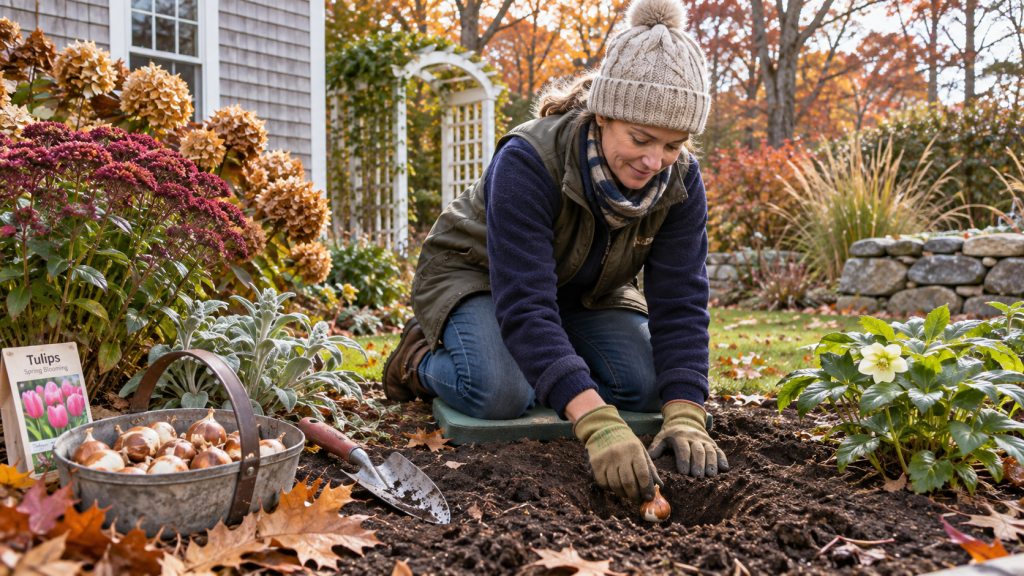
1. Spring-Flowering Bulbs
Good news for flower lovers! Early November can still be a wonderful time to plant spring-flowering bulbs.
Tulips, daffodils, crocuses, hyacinths, and other spring favorites need a period of winter chilling to produce their colorful blooms.
Planting them before the ground freezes allows their roots to develop and prepares them for a beautiful spring display.
For the best results:
- Choose healthy, firm bulbs.
- Plant them in well-drained soil.
- Follow the recommended planting depth, generally about two to three times the bulb’s height.
- Water after planting to help settle the soil.
- Mark planting areas so you remember where those spring beauties are hiding!
Gardening tip: Plant bulbs in clusters for a fuller, more natural-looking display. Imagine those cheerful daffodils greeting you after a long Connecticut winter!
2. Garlic for Next Summer’s Harvest
Here’s a delicious reason to keep gardening!
Garlic is traditionally planted in fall for harvesting the following summer.
October is generally the preferred planting time in Connecticut, but early November may still offer an opportunity if soil conditions are favorable.
Choose healthy seed garlic and plant individual cloves with the pointed ends facing upward in a sunny, well-drained location.
After the soil begins to freeze, add clean straw mulch to help reduce temperature fluctuations and frost heaving.
A little effort now can lead to homegrown garlic next summer!
3. Select Container-Grown Trees and Shrubs
Some hardy, container-grown deciduous trees and shrubs may tolerate late-fall planting when conditions are unusually favorable.
However, November is later than the preferred planting window for most trees and shrubs in Connecticut.
Newly installed plants need time to establish roots before facing freezing temperatures.
Before planting a tree or shrub this late in the season, consider its variety, root condition, site drainage, and the weather ahead.
For most major landscape additions, waiting until spring is the safer choice.
What Should Wait Until Spring?
While certain planting projects may still be possible, others are better saved for warmer weather.
Evergreen Trees and Shrubs
Arborvitae, hollies, rhododendrons, pines, and spruces generally establish more successfully when planted in spring or early fall.
Unlike deciduous trees, evergreens retain their foliage throughout winter and can continue losing moisture even when their roots are surrounded by frozen soil.
Without an established root system, they may be vulnerable to winter drying and browning.
Late November is generally not the ideal time to plant new evergreens in Connecticut.
Tender Perennials and Warm-Season Plants
Plants that aren’t reliably hardy in our region should wait until spring.
Even cold-hardy perennials may struggle if planted too late, particularly when their roots haven’t had enough time to become established.
Major Landscape Projects
Thinking about adding a large tree, planting a privacy hedge, or completely redesigning a garden bed?
Spring often provides a more forgiving establishment period for these bigger projects.
Remember, successful gardening isn’t about getting everything planted before winter. It’s about giving your plants the best possible start!
Five Tips for Successful Late-Fall Planting
If you’re squeezing in one final outdoor planting project, keep these tips in mind.
1. Check the Soil
Avoid planting in frozen, waterlogged, or heavily compacted soil. Roots need good drainage and oxygen to grow properly.
2. Choose Cold-Hardy Plants
Select varieties suited to Connecticut’s climate, and remember that an established plant can tolerate conditions that might damage a newly planted one.
3. Plant at the Proper Depth
Follow the recommended planting depth for each species. Avoid burying tree root flares or perennial crowns too deeply.
4. Water Thoroughly
Even when temperatures are cool, new plantings need adequate moisture. Water after planting and monitor soil conditions until the ground freezes.
5. Protect the Roots
Use organic mulch where appropriate to conserve moisture and moderate soil temperatures. Keep mulch away from trunks and stems.
November Is Also a Great Time to Plan Ahead!
Even when planting season is winding down, there’s still plenty to do in the garden.
Take a walk around your landscape and think about what you’d like to improve next year.
Maybe you’ve been dreaming about a beautiful flowering tree, a colorful perennial border, or new shrubs to add privacy and year-round interest.
November is also a great time to test your soil, evaluate drainage, and prepare for future garden projects.
A little planning now can make spring gardening even more exciting!
Your Next Gardening Project Starts at Cropley’s!
Wondering if there’s still time to plant those spring bulbs or whether it’s better to wait until spring for that new tree or shrub?
Stop by Cropley’s Garden Center in Bolton, CT!
Our knowledgeable team is happy to help you explore seasonal planting options, choose plants suited to Connecticut’s growing conditions, and find the supplies you need to prepare your garden for winter.
Whether you’re finishing up your fall projects or dreaming about next spring, we’re here to help!
Because even when the growing season slows down, there’s always something wonderful to look forward to in the garden!